The shift in the 1L-2L recruiting timeline has been discussed extensively in the legal talent world, but one question has received far less attention: How is this change affecting law schools themselves?
Earlier recruiting is forcing schools to rethink not only when career services engages with students, but also the timing of academic offerings and programming across campus. The ripple effects extend well beyond recruiting and are beginning to reshape the entire law student experience.
One of the biggest questions facing career services offices today is simple but consequential: When should law schools begin engaging with incoming students?
Should Career Services Start Before Day One?
This question came into sharp focus earlier this spring when an undergraduate institution reached out to Flo to learn more about Flo Forward, the legal career platform for law students and attorneys. The conversation highlighted a growing trend: pre-law students who have already committed to law school are feeling pressure to begin career preparation before they even arrive on campus.
Career services professionals are seeing this firsthand through admitted students requesting counseling appointments and seeking guidance before the semester begins.
This begs the question, is it time to start working with admitted students, known as 0Ls, prior to the school year starting? Will incoming students be more engaged in the summer than if career services tries to compete with all the other departments on campus in the fall – not to mention the student organizations that students will be joining or learning about? Or would introducing career support too early and without context make all this effort fruitless?
The Data Points to Earlier Engagement
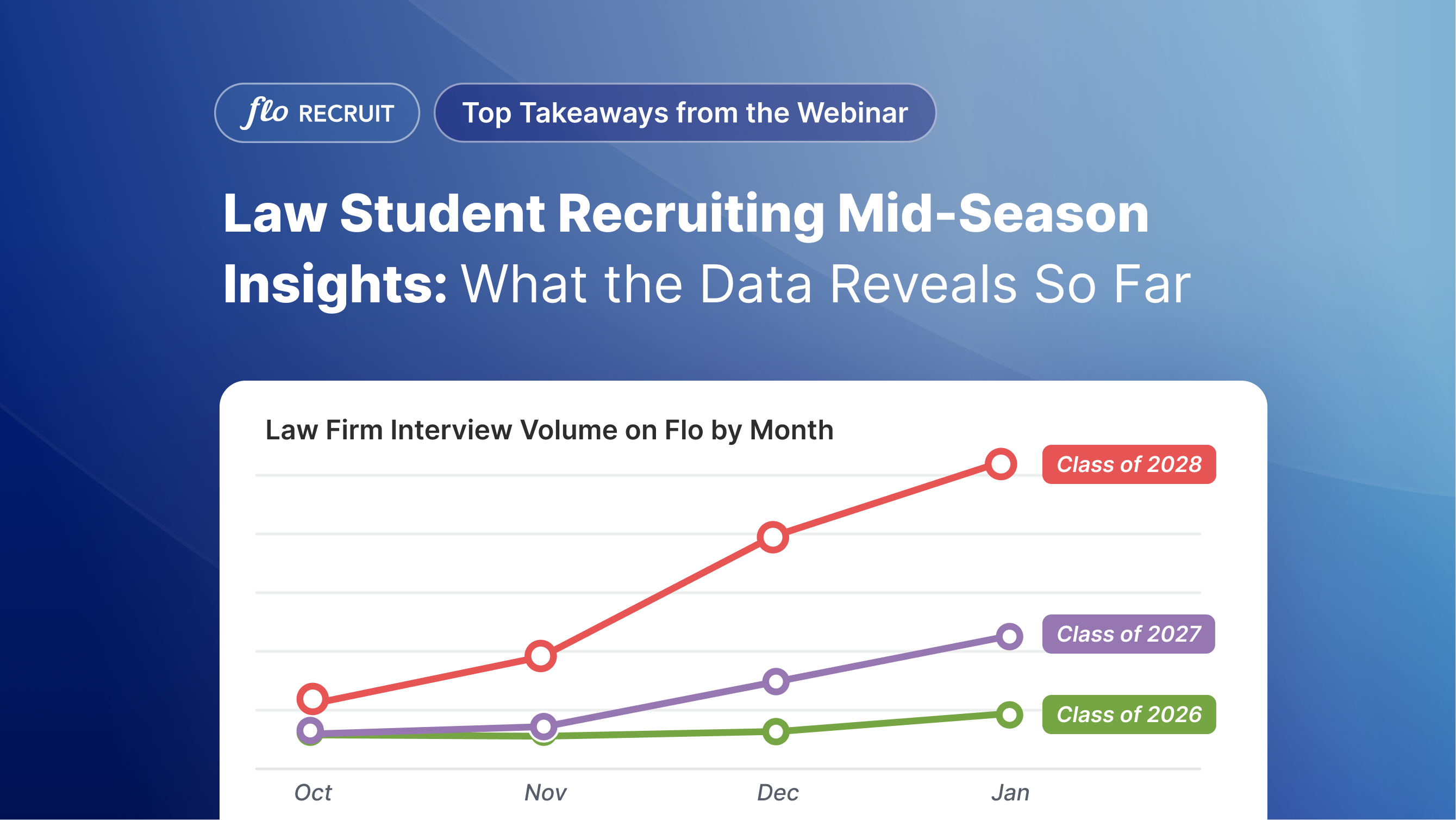
Data from Flo’s “1L-2L Recruiting Data Review” webinar last fall suggests that the shift to 0L career support is already underway. Last year's 1L class began creating Flo Forward accounts earlier than previous classes, and it seems likely that this trend will continue with this year's incoming students.
Based on a recent survey of law schools, many law schools are already planning to engage with their 0L classes over the summer, although "engagement" can mean many different things. For most schools, it involves providing students with career resources before classes begin.
The challenge isn't whether to share resources, but it's determining when and how to introduce them. Timing and context matter. Providing information too early, without sufficient explanation, can lead to misunderstandings, misinformation, and ultimately student distrust. Those outcomes only make advising more difficult.
Until recently, working with students before they entered law school would have seemed unnecessary. However, the increase in early recruiting activity last fall demonstrated that introducing students to the legal recruiting landscape earlier may now be both helpful and necessary.
Where Should Students Begin?
Once schools decide to engage students earlier, the next question becomes where to start.
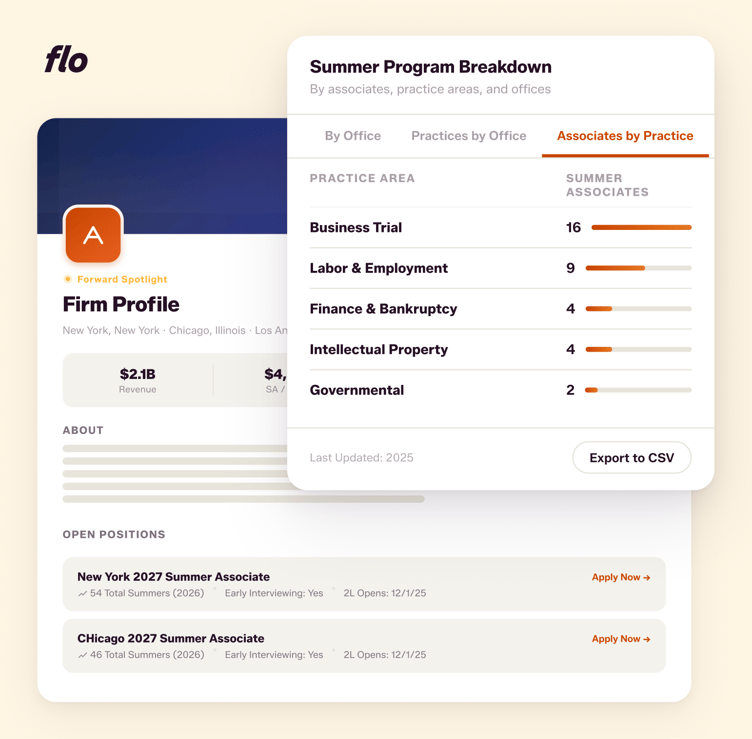
For most students, researching employers is the logical first step. Resources such as Chambers, Vault, and Flo Forward's employer profiles help students understand employers and compare opportunities.
Flo Forward's law firm profiles are unique because the information is provided directly by employers and is continually updated. Students have consistently noted that the summer program information provides valuable context that is difficult to find elsewhere.
Helping Students Stay Organized
Once students arrive on campus, the volume of information increases dramatically. Law school calendars, Career Services Management systems, and Flo Forward's event board, and the Legal Recruiting Tracking all become important sources for networking and recruiting opportunities.
Students also need a way to organize everything. Within their Flo Forward account, they can track events, making it easier to manage networking opportunities throughout the recruiting cycle.
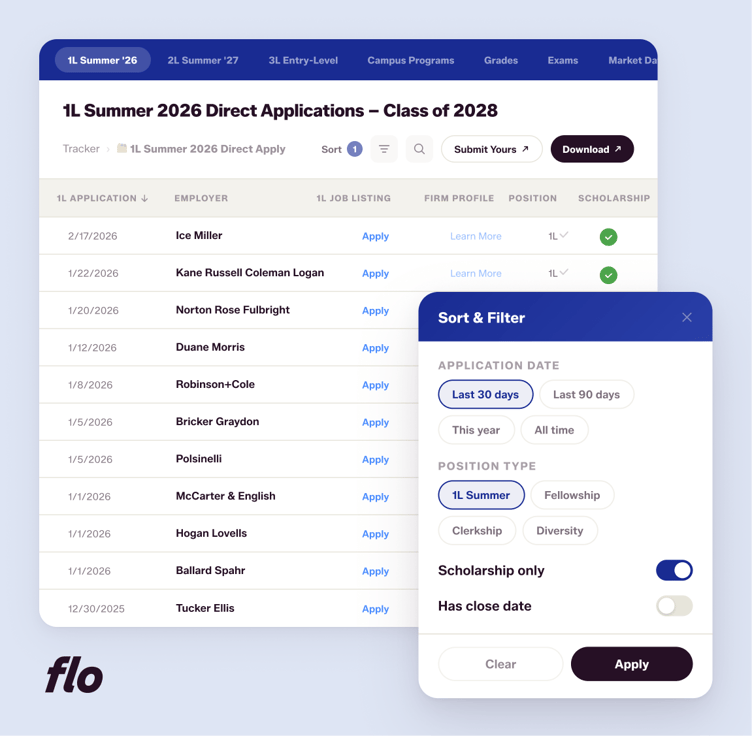
Applications present a similar challenge. As recruiting timelines continue to move earlier, students need to know where summer opportunities are posted and how to stay on top of application deadlines.
The Flo Legal Recruiting Tracker, particularly the 1L and 2L Summer Associate sections, help students anticipate when applications will open and create a plan that balances recruiting with academic responsibilities. Career services job boards, PSJD, Flo Forward's job board, and other recruiting resources will all play important roles this season.
Students can also track applications submitted outside the Flo platform by adding non-Flo jobs to their Forward account, allowing them to manage their entire application process in one place. Flo Forward's job board currently includes law firm opportunities from firms with 100 or more attorneys and, beginning this summer, public interest positions, as well.
Delivering Resources Effectively
Even if schools decide to begin working with students before orientation, another question remains: What is the best way to reach them?
Should information be delivered through email, videos, virtual programming, or some combination of formats? Which approaches are most likely to engage students without overwhelming them?
CSOs can partner with resources like Flo to develop strategies that introduce students to available resources in a thoughtful and effective way.
Conversations with law schools we worked with in the fall demonstrated students who fully understood how to use the Flo Forward platform ultimately had a better recruiting experience while also providing their career services offices with richer and more complete data. As demonstrated in USC Gould's Flo Forward playbook, higher platform adoption led to stronger data sharing, giving career advisors a clearer understanding of each student's progress and enabling more informed advising. It also streamlined data collection, allowing career services offices to respond more quickly as recruiting conditions continued to evolve.
Looking Ahead
The pressure to begin career support before law school begins may be here to stay. As recruiting timelines continue to shift, law schools will need to reconsider not only when they engage students, but how they prepare them for an increasingly accelerated hiring market.
Fortunately, the resources available to support students, and the career services professionals who guide them, continue to grow.