Perspectives from career services leaders at USC Gould, UVA Law, and UCLA
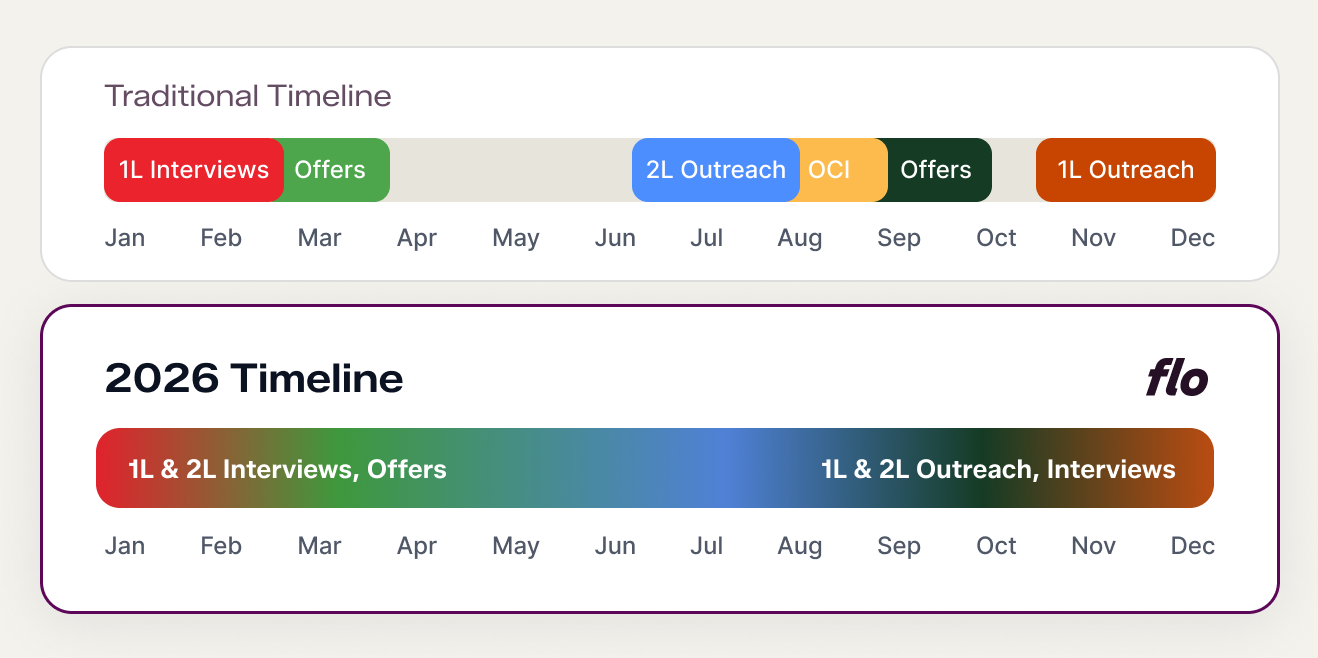
A few years ago, the legal recruiting calendar was relatively predictable. There was a defined OCI process, students followed a fairly standard timeline, and career services offices had a much clearer view into how recruiting activity was unfolding.
That’s no longer the reality.
Today’s recruiting cycle is happening earlier, across more channels, and with far less centralized structure. Students are balancing direct applications, networking events, recruiter outreach, interview requests, and firm research all at once, often before they’ve even settled into their first semester of law school. As law schools rethink their advising and recruiting strategies to keep pace with these changes, many are using Flo Forward to create more visibility into student engagement, centralize recruiting activity, and better guide students through an increasingly decentralized process.
During Flo’s recent webinar, leaders from USC Gould, UVA Law, and UCLA joined us to talk through a practical question many schools are actively navigating:
How do you continue guiding students effectively when recruiting has become so decentralized?
A Recruiting Landscape That’s Moving Faster Than Ever
One of the clearest themes throughout the discussion was just how quickly recruiting timelines continue to evolve.
Schools are beginning career education earlier. Firms are engaging students sooner. And students are expected to make informed decisions with less time and less structure than in previous cycles.
Throughout the webinar, panelists discussed how their offices are adapting to these accelerated timelines while still trying to create thoughtful, student-centered advising experiences. Across every conversation, the Flo Ecosystem emerged as a key part of that strategy, helping schools create more visibility into student engagement, centralize recruiting activity, and guide students through a process that no longer follows a traditional timeline.
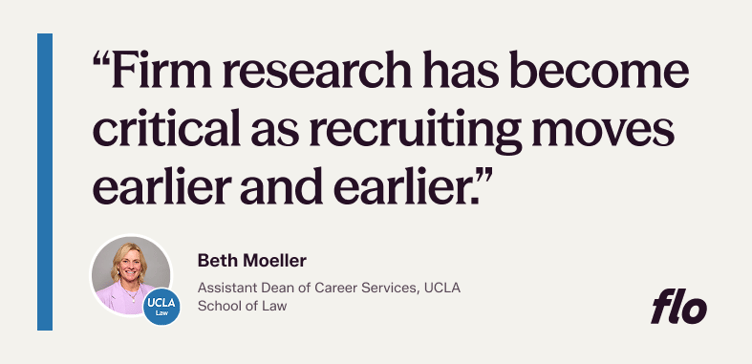
“Firm research has become critical as recruiting moves earlier and earlier.” — Beth Moeller, UCLA School of Law
Audience polling during the session reinforced that shift as well. Many schools indicated they are now introducing recruiting resources during the summer, even before classes begin, while firms continue evaluating how early they intend to move this cycle.
The result is a recruiting environment where both schools and employers are actively recalibrating in real time.
Visibility Has Become Essential
As recruiting becomes more fragmented, visibility into student activity has become increasingly important for career services teams.
Emma Glancy from UVA discussed how helpful it has been to regain insight into student recruiting behavior after moving away from more traditional OCI structures.
“It’s nice for counselors to be able to see the pipeline of applications to interviews because that’s something we’ve never really had outside of student reporting.” — Emma Glancy, UVA School of Law
Rather than relying entirely on students to self-report where they’ve applied or interviewed, counselors can now better understand where students are in the process and where additional support may be needed with Flo’s reporting tools.
That visibility allows advisors to move from reactive counseling toward more proactive guidance.
Instead of spending meetings reconstructing application histories, counselors can focus on strategy, preparation, and helping students navigate decisions with more confidence.
The Same Tools, Used in Very Different Ways
One of the most interesting parts of the conversation was seeing how differently each school uses many of the same Flo Forward resources.
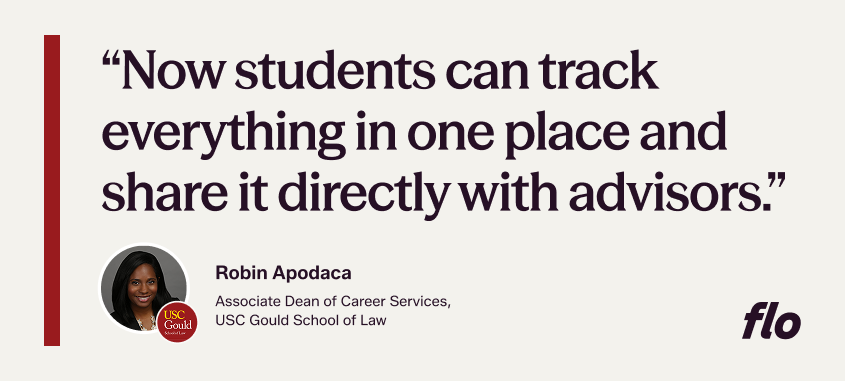
At USC Gould, Robin Apodaca described Flo Forward as both a student organization tool and an advising resource. Students use the platform to track applications, interviews, callbacks, and offers in one place, creating much more productive advising conversations.
"Our students are interviewing so much that they even forget who they've interviewed with…Now it's really easy for them to download this information and reach back out." — Robin Apodaca, USC Gould School of Law
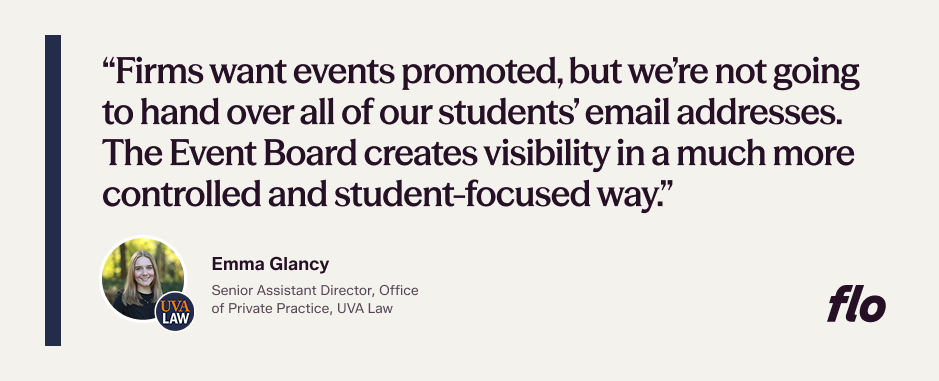
At UVA, Emma Glancy mentioned the focus is centered more heavily around engagement visibility, understanding how actively students are participating in networking and recruiting opportunities in Flo’s Student Activity Reporting.
“Having this feature built into Flo Forward bridges that gap in visibility.” — Emma Glancy, UVA School of Law
At UCLA, Beth Moeller highlighted how Employer Profiles have become especially valuable for helping students conduct deeper firm research and make more informed decisions earlier in the recruiting process.
“The employer profiles have been extremely helpful, especially for our students who are looking out of town.” — Beth Moeller, UCLA School of Law
What became clear throughout the discussion was how much schools have expanded the way they use Flo. What once started as a tool for hosting interviews has evolved into a broader career navigation resource, with each school leveraging Flo Forward in ways that support their own advising strategies, student needs, and recruiting workflows.
Flo’s Recruiting Tracker, Event Board, Firm Profiles, and application tracking tools are flexible enough to support very different advising models depending on the needs of each school and student population.
Giving Career Services Teams Time Back
Another recurring theme throughout the webinar was time.
Several panelists talked about how much administrative work traditionally goes into trying to piece together recruiting activity from spreadsheets, surveys, emails, and individual student conversations.
Flo’s ability to centralize that information creates a meaningful operational shift for career services offices.
Instead of spending hours tracking down recruiting updates, counselors can spend more time focused on the human side of advising:
- helping students evaluate opportunities
- preparing for interviews
- refining application strategy
- supporting students who may feel overwhelmed or disengaged
That operational efficiency ultimately creates more room for higher-value student support.
Students Need a Centralized Recruiting Experience
The panel also discussed how students themselves are increasingly looking for a more centralized recruiting experience.
As recruiting expands beyond OCI and into direct applications, networking, and rolling outreach, students are managing more information than ever before.
Flo Forward’s recent enhancements, including the ability for students to track applications and interviews from anywhere, not just Flo-posted jobs, were a major topic of conversation during the webinar.
Students can now:
- track applications throughout their lifecycle
- manage interviews and callbacks
- join interviews directly from their dashboard
- organize opportunities from both Flo and external sources
- keep recruiting activity centralized in one place
For many schools, that centralized experience creates benefits on both sides: students stay more organized, while counselors gain clearer visibility into engagement and recruiting momentum.
Where Recruiting Goes From Here
If there was one overarching takeaway from the conversation, it was this:
Legal recruiting is unlikely to become simpler anytime soon.
Timelines will continue shifting. Employer strategies will continue evolving. And schools will continue adapting alongside students in real time.
But throughout all of that change, one thing remained consistent across every panelist’s perspective: career services teams want better ways to support students without adding more administrative complexity.
That’s ultimately what the conversation kept returning to, not just technology for the sake of technology, but tools that create more transparency, better organization, and stronger advising experiences during an increasingly complicated recruiting process.
If you’d like to learn more about Flo Forward, the Recruiting Tracker, or Flo’s law school reporting and advising tools, we’d love to connect and continue the conversation.