Review season is here. At many law firms, associate evaluation forms are being finalized this month and many annual cycles launch in the coming weeks. That makes now the right moment to ask whether your performance management process is producing the outcomes you want.
We partnered with Volta, the coaching and consulting firm that helps law firms develop their lawyers and business professionals, on a new guide: Updating Your Firm's Performance Management with a Culture of Feedback. Volta brings deep expertise in feedback itself: how to give it, how to receive it, and how to build a culture where it happens year-round. Flo brings the process and technology view: how reviews actually run, where they get stuck, and how to ensure quality feedback worth acting on.
Here's a preview.
Start with the goal, then build the process around it
Volta's starting point is one we hear from talent teams constantly. Decide whether a process is evaluative (informing compensation, promotion, and partnership-track decisions) or developmental (supporting growth through feedback and coaching). When one process tries to do both, reviewers aren't sure how they should be approaching feedback, and reviewees can't tell how their self-assessments will be used.
Once the goal is clear, the process has to match it. Evaluative reviews need comparable data, like rating scales tied to competencies and benchmarks. Developmental feedback needs narrative questions, room for context, and a cadence closer to the work, such as matter-based check-ins. The guide breaks down how annual reviews and upward reviews differ, from who rates whom to whether results can inform personnel decisions.
Assess where your current process falls short
Before you make changes, the guide recommends assessing your current process across five areas: technology, participation, utilization, feedback, and substance. Start with the data. How many people complete their reviews, how long does it take them, and how substantive is the feedback they write?
Then look at what might be driving those numbers, such as form length, how long the cycle stayed open, and what else competed for attention, like year-end billing. Generic, surface-level feedback is often a sign of feedback fatigue, unclear direction, or a fear of giving open and honest feedback. Finally, talk with people across the firm about their experience giving and receiving feedback. The guide pairs this assessment with a checklist of what to look for in a platform.

Bring IT and Knowledge Management in early
One of the most common causes of a stalled rollout is a data or security question from a team that wasn't consulted earlier. IT and Knowledge Management are critical, often hidden stakeholders. The guide lists the questions to ask up front, including where the data will live, who will need access, and who will need to pull a report for the compensation committee a year from now.
Better feedback in, better insights out
"Your writing is sloppy" isn't feedback anyone can act on. "In the brief you submitted last night, you missed three key citations, which weakened our argument" is. Volta shares frameworks like SBI (Situation, Behavior, Impact) and COIN (Context, Observation, Impact, Next Steps) that help reviewers write the second version.
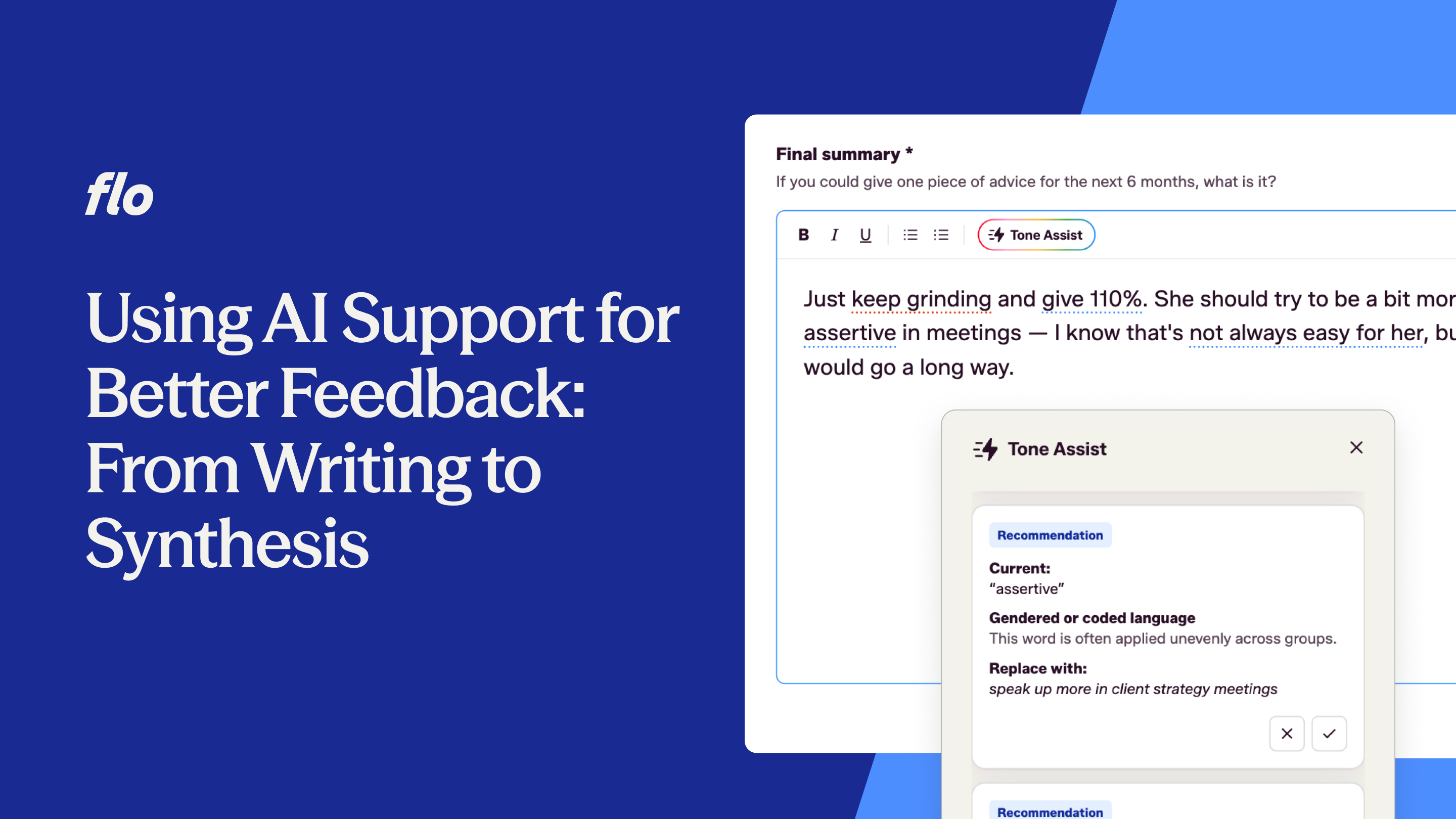
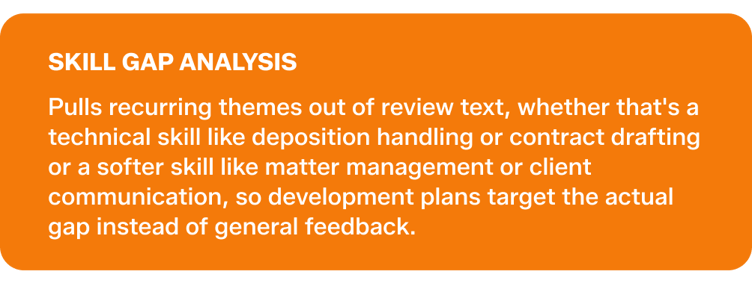
Quality matters even more now that AI can synthesize review content. In Flo Performance Management, Flo AI identifies themes, trends, and recurring language across narrative feedback, and its rewriting and tone-assistance tools include built-in guardrails for protected categories. Stronger inputs mean leaders can see where associates stand against practice group and class-year expectations and target development plans to real skill gaps.
What else is inside
- When to drive change internally and when to bring in outside support
- Designing competencies and questions by level, practice group, and role
- Building psychological safety so feedback becomes second nature
- A typical annual review timeline, from September kickoff to February conversations
- Six best practices for sustainable adoption, from piloting to coaching
Whether you’re planning a refresh or a full overhaul, the Flo x Volta guide walks you through each step, from building your coalition to surfacing insights with AI. Download the full guide.
To learn more about how Flo can help create a Performance Management process that is simple, streamlined, and consistent, reach out.