For many Professional Development teams, performance review season means a familiar cycle of reminders, follow-ups, and last-minute scrambles for incomplete evaluations, particularly from partners. What should be a strategic process to guide development often becomes an exercise in persistence.
Time is the Real Currency
Partners often avoid reviews simply because the process feels inefficient. Any time spent navigating cluttered forms, deciphering unclear scoring systems, or searching for relevant information feels like unnecessary overhead.
A modern performance evaluation solution must respect that reality. It should be intuitive, clean, and focused. Questions should be clear and purposeful, covering only the most critical performance criteria. Long competency matrices filled with repetitive or vague language discourage thoughtful engagement.
When partners can understand what is being asked within seconds, completion rates improve.
Providing Context Without Extra Work
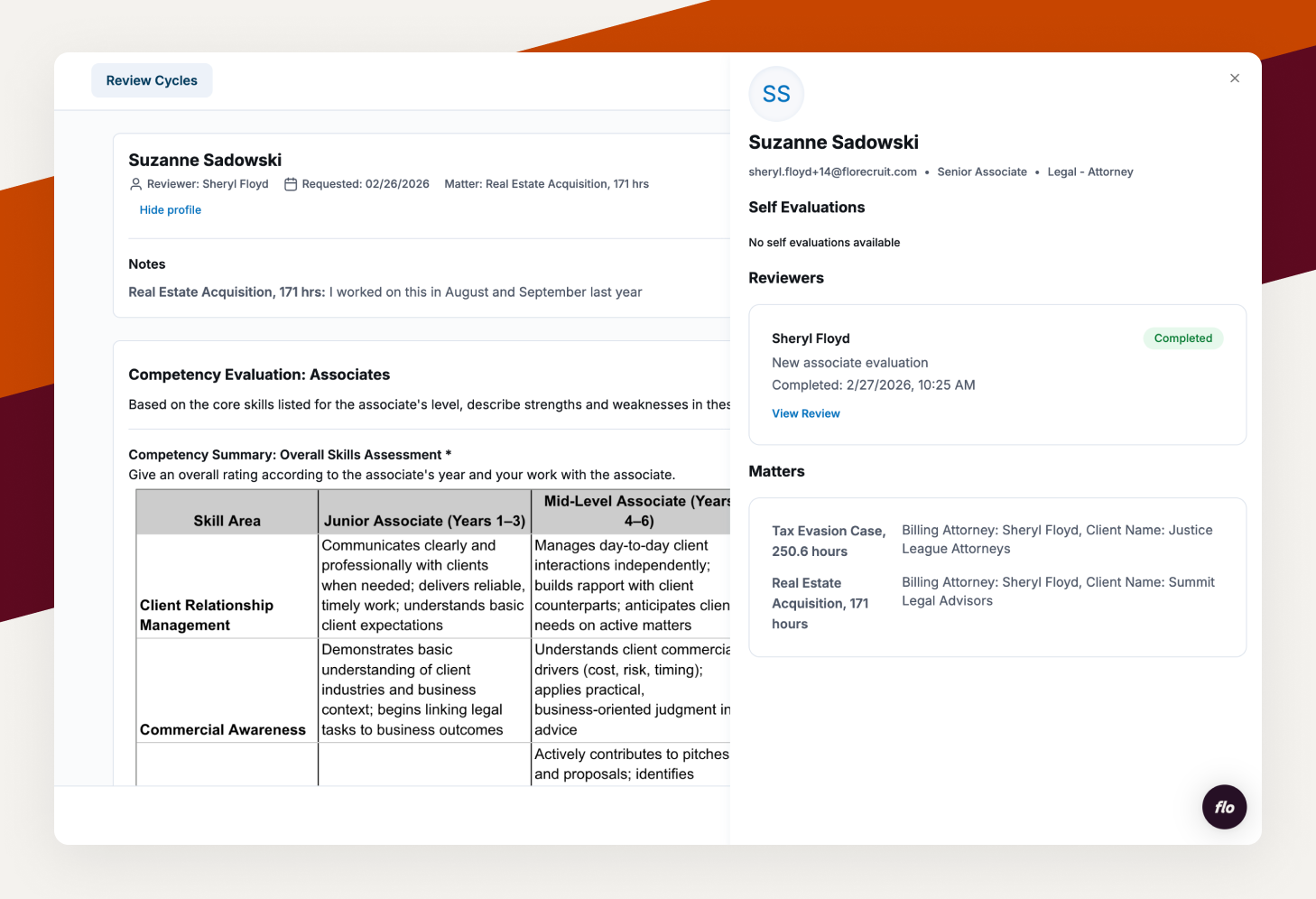
Another common barrier to strong reviews is the burden of recall. By the time review season arrives, partners may be trying to reconstruct months of work from memory. Without access to consolidated information — such as matters handled, hours contributed, prior feedback, or past development goals — writing a meaningful evaluation becomes harder.
The right evaluation system eliminates that friction. It surfaces relevant information in one place so the partner does not need to dig through emails or billing reports. When context is built into the review workflow, feedback becomes more concrete and less generic.
This is particularly important in law firms where performance data and qualitative observations must work together. A comprehensive evaluation solution bridges that gap.
Clarity in Scoring Builds Confidence
Partners are far more likely to complete evaluations when they understand what each rating means. Ambiguous scoring systems create hesitation. Clear definitions, examples, and structured prompts reduce uncertainty and increase consistency across reviewers.
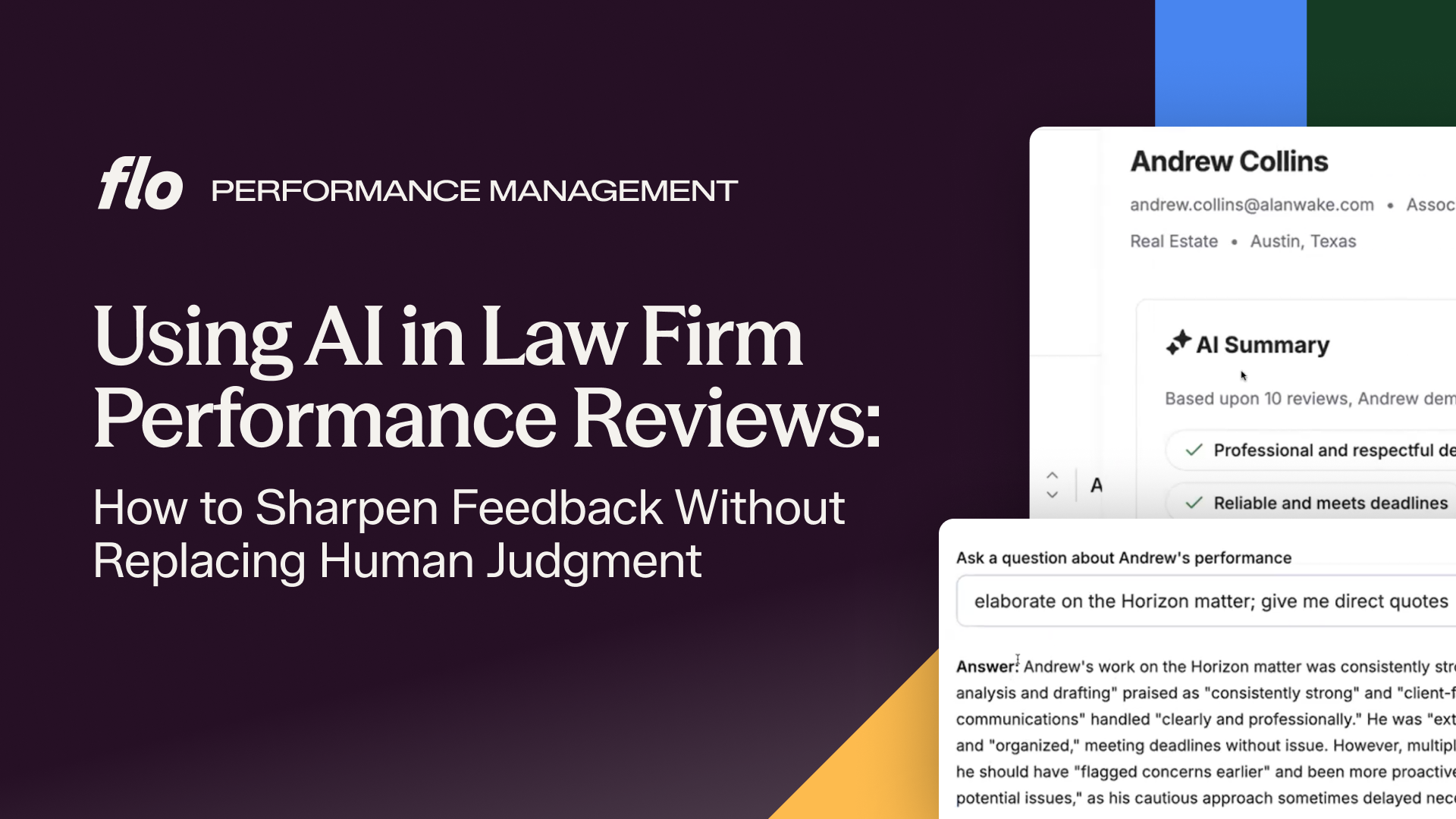
When partners feel confident in how to evaluate, the process feels more professional and less arbitrary. Some firms are beginning to incorporate guided prompts, including optional AI-assisted suggestions, to help reviewers articulate feedback more effectively. Used thoughtfully, this kind of support improves quality without replacing human judgment.
The goal is not to automate evaluation decisions but to remove ambiguity from the process.
Automation Reduces Administrative Drag
For many Professional Development teams, the most time-consuming part of review season is not collecting feedback — it is chasing it. Manual follow-up emails, reminder tracking spreadsheets, and status updates consume hours that could be spent analyzing insights and supporting talent strategy.
A strong evaluation platform distributes reviews automatically, sends targeted reminders only to those with outstanding tasks, and provides clear dashboards showing completion status. This not only reduces administrative burden but also creates accountability. When progress is visible, the process feels structured rather than chaotic.
Higher completion rates in less time are not just a convenience; they are a measurable operational improvement.
.png?width=1366&height=1072&name=reminder-email2%20(1).png)
Designing for Real Workflows
Partners rarely complete all their reviews in a single sitting. Client calls interrupt. Court deadlines arise. Meetings run long. A system that does not auto-save responses or clearly show what remains incomplete adds frustration.
Flexibility is essential. Reviews should save automatically and allow partners to return easily, picking up exactly where they left off. The experience should mirror the intuitive technology they use elsewhere in their professional lives.
Additionally, firms benefit from encouraging partners to document feedback throughout the year rather than relying solely on year-end memory. Even something as simple as maintaining a running note — in a document, OneNote, or secure internal tool — allows observations to be captured in real time. When review season arrives, partners are not starting from scratch. The result is more specific, actionable evaluations.
Over time, this habit strengthens the overall quality of feedback culture within the firm.
Security Is Non-Negotiable
Because performance evaluations contain sensitive information, security and confidentiality must be foundational. Partners need to trust that data is protected and access is appropriately restricted. A secure, centralized platform provides that assurance and reinforces professionalism in the process.
Trust in the system contributes directly to participation.
Technology as an Enabler of Results
When thoughtfully implemented, the right performance evaluation solution does more than digitize a form. It reduces friction, clarifies expectations, centralizes information, and automates administrative tasks. For PD teams, that translates into fewer hours spent on manual follow-up and more time focused on strategic development initiatives.
For partners, it means a streamlined process that respects their time and supports meaningful feedback.
The outcome is tangible: higher completion rates, more consistent evaluations, and stronger documentation to inform compensation and advancement decisions.
Technology alone does not create a culture of feedback. But without the right infrastructure, even the best-intentioned review program will struggle.
In Part 2 of this series, we will explore the cultural side of the equation: How leadership alignment, accountability, and a shared understanding of value motivate partners to fully engage in the review process.